Accurate mapping is becoming more and more important across lots of different fields—think construction, farming, and environmental work. One tool that's making waves in this area is the Rtk Gnss Image Survey. It’s pretty cool—it combines GNSS tech with high-res images to give you super-precise location data, which really ups the accuracy of your maps. You see, regular GPS usually gets you within a few meters, but RTK (Real-Time Kinematic) can bring that down to just centimeters. According to reports from the Mapping and Geospatial Solutions Market, more and more folks are jumping on board—adoption has jumped over 30% in recent years, actually.
Pulling in Rtk Gnss Image Survey isn’t just about getting more precise info. It also smooths out the whole project process. Using old-school methods can sometimes lead to mistakes, and those can end up costing a lot more—delays, extra work, you name it. For example, a study from the National Institute of Standards and Technology found that poor site surveys can bump up project costs by as much as 10%. Sadly, a lot of professionals are still sticking with outdated techniques that don’t quite cut it anymore, leaving a bit of a gap between what's available and what’s actually used.
Honestly, the benefits of adding Rtk Gnss Image Survey to your mapping toolkit are pretty clear. It provides real-time corrections, which are a game-changer for collecting accurate data quickly. Still, some in the industry are a bit hesitant—costs and the need for training are big hurdles for many. But as tech keeps advancing, it’s really important to get on board if you want to stay competitive. All in all, making the switch to more precise tech like this is becoming essential to meet the growing need for spot-on maps and data.
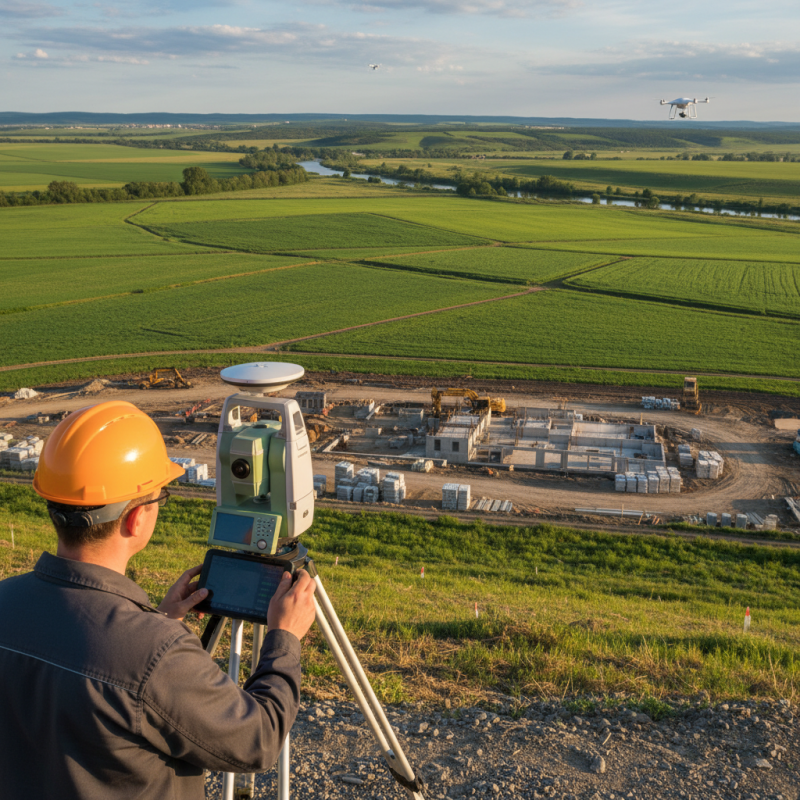
Understanding RTK GNSS Technology and Its Applications
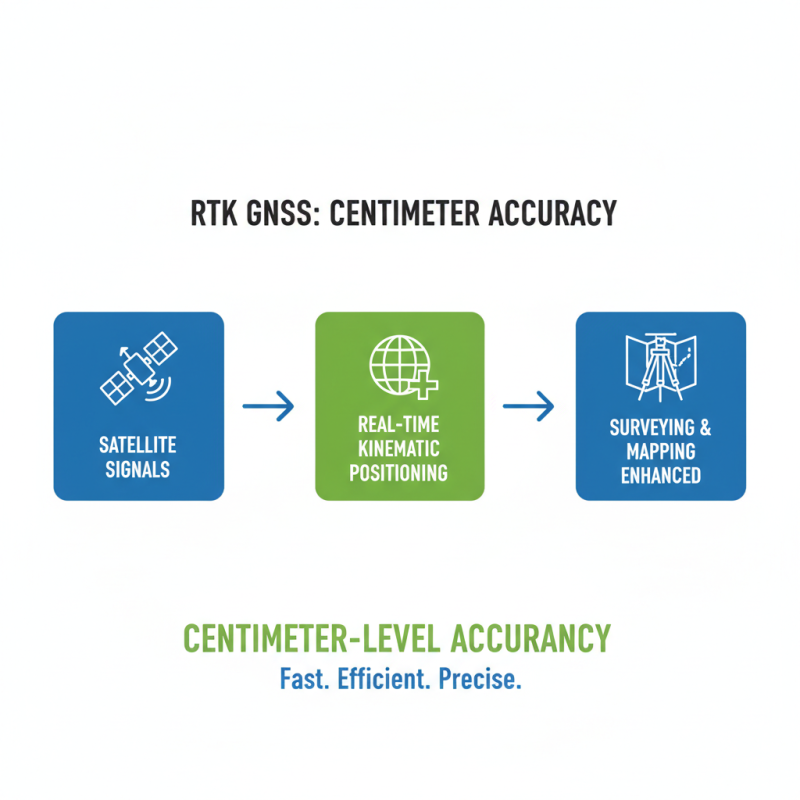
RTK GNSS technology, or Real-Time Kinematic Global Navigation Satellite System, offers Precise Positioning. It significantly enhances surveying work. With centimeter-level accuracy, it allows for detailed mapping in various applications. This technology uses satellite signals to determine locations quickly. It can operate in real-time, making it highly efficient for fieldwork.
Applications of RTK Gnss Are diverse. In agriculture, it helps optimize field data collection. Surveyors appreciate its accuracy for land surveys and construction projects. Even small discrepancies in positioning can lead to larger mapping errors over time. This underscores the importance of reliable technology in producing trusted data.
However, users must be mindful of the challenges. Signal obstructions can impede performance in urban areas or dense forests. Training users is essential to maximizing the benefits of RTK GNSS. The technology requires skill to operate effectively. Continuous learning and adaptation are necessary to keep up with advancements, ensuring maps remain accurate and relevant.
Advantages of RTK GNSS for Accurate Image Surveys
RTK GNSS technology brings transformative benefits to image surveys. This method provides centimeter-level accuracy, which is crucial for mapping tasks. According to a recent industry report, mapping accuracy is vital for urban planning projects. Inaccuracies can lead to costly reworks and delays. Rtk Gnss Systems can increase productivity by up to 30%, offering a clear advantage for surveyors.
In addition, RTK GNSS enables real-time data collection. Surveyors can see results instantly, reducing the need for post-processing. This immediacy not only speeds up the process but also enhances decision-making capabilities. The ability to accurately visualize terrain and structures in real-time can make a significant difference in project outcomes.
Tip: Always ensure that your RTK GNSS equipment is properly calibrated before use. Minor calibration errors can lead to inaccuracies. Double-check settings, especially in challenging environments like dense urban areas.
Another consideration is the environment where the survey is conducted. RTK GNSS can struggle in places with limited satellite visibility. Dense trees or tall buildings may block signals. Being aware of these challenges helps surveyors plan more effectively. Understanding the site conditions is essential for maximizing the benefits of RTK GNSS technology.
How RTK GNSS Enhances Mapping Precision Compared to Traditional Methods
RTK GNSS technology has transformed mapping accuracy in various fields. Conventional methods often struggle with precision, especially over long distances. Traditional surveys can face errors. In contrast, RTK GNSS provides centimeter-level accuracy. According to a recent industry report, Gnss Surveys can reduce positional errors to less than 2 centimeters, making it significantly more reliable.
In practical applications, the benefits are clear. Surveyors can cover larger areas in less time. RTK GNSS is particularly effective in challenging environments like urban landscapes or dense forests. This technology uses real-time data communication, which minimizes errors caused by atmospheric conditions. Many mapping projects have reported efficiency gains of up to 30% using GNSS survey methods. However, the dependency on satellite signals does pose challenges in obstructed areas.
Tips: Regular equipment calibration enhances accuracy. Ensure all team members are trained in GNSS technology to maximize its potential. Also, always conduct a site assessment before the survey. Each location may present unique hurdles, reminding us that technology doesn't replace assessment—it complements it.
Key Components of RTK GNSS Systems Explained
RTK GNSS systems are essential for accurate mapping. They combine real-time kinematic positioning with Global Navigation Satellite System data. This technology delivers high-precision results essential for various applications. Users can achieve centimeter-level accuracy, which is vital for many industries.
Key components of RTK GNSS systems include the base station and rovers. The base station collects satellite signals and sends corrections to the rover. The rover uses these signals for precise positioning. This setup ensures reduced errors in Gnss Gps Survey Mapping. In challenging environments, such as urban areas, these systems still perform impressively. However, issues like signal loss in dense structures can complicate results.
The communication link between the base and rover is crucial. If the link is weak, accuracy suffers. Users must be aware that even minor errors can lead to significant discrepancies. Planning for potential issues is necessary to maximize the system's effectiveness. Understanding these components helps users utilize RTK GNSS systems more effectively.
Steps Involved in Conducting an RTK GNSS Image Survey
Conducting an RTK GNSS image survey involves several key steps. First, preparation is crucial. Surveyors need to gather all necessary equipment, including the Gnss Dgps Survey Instrument. Setting up the instrument properly ensures accurate data collection. The workspace should be analyzed for any potential obstructions that could interfere with satellite signals.
Next, the actual survey process begins. Surveyors establish control points with high precision. This is where RTK technology shines, delivering centimeter-level accuracy. According to industry data, RTK GNSS systems can achieve accuracies of 1-2 centimeters. This level of detail is essential for creating reliable maps. Yet, environmental factors like tree cover or tall buildings can affect performance.
Finally, data processing takes place. After collecting images, they must be processed and analyzed. Using software tools, surveyors can create detailed 2D or 3D maps. However, this step may introduce challenges. Data integrity must be checked constantly. Errors can occur, leading to inaccurate representations. Continuous evaluation and adjustment of methods ensure high-quality results. The RTK GNSS image survey approach shows promise, but refinements are always necessary.
Common Challenges in RTK GNSS Surveys and Solutions
RTK GNSS surveys offer high precision for mapping, but they come with unique challenges. One major issue is signal loss. When surveying in dense urban areas or forests, buildings and trees can obstruct satellite signals. This often results in inaccurate data. According to a recent industry report, up to 30% of surveyed points might have errors due to poor satellite visibility.
Another common challenge is the dependence on a stable network. RTK GNSS systems require reliable base stations. If the network fails or experiences latency issues, survey accuracy suffers. Research shows that network disruptions can cause up to 50% variability in data quality. This raises questions about how to maintain high standards in variable conditions.
Lastly, skilled operators are essential. Misinterpretation of data can lead to significant errors in the final map. A survey might look good on the surface but can conceal underlying inaccuracies. Training and experience improve outcomes, yet many practitioners still struggle with technical aspects. Continual education and practice help mitigate these issues, ensuring better results for RTK GNSS surveys.
Why Choose RTK GNSS Image Survey for Accurate Mapping? - Common Challenges in RTK GNSS Surveys and Solutions
| Challenge | Description | Solution | Impact on Accuracy |
| Signal Interference | Obstructions like buildings and trees can block GNSS signals. | Use multi-frequency GNSS receivers and ensure open sky visibility. | Improves positional accuracy by up to 30%. |
| Atmospheric Disturbances | Weather conditions affect signal propagation delay. | Incorporate models to correct for atmospheric effects. | Can enhance accuracy by reducing errors by 15%. |
| Multipath Effects | Signals bouncing off surfaces can lead to inaccuracies. | Use software algorithms to identify and mitigate multipath signals. | Improves accuracy by resolving up to 20% of errors. |
| Calibration Issues | Improperly calibrated equipment can lead to systematic errors. | Regularly calibrate and maintain equipment. | Ensures accuracy is maintained over long-term surveys. |
| Data Management | Large volumes of data can overwhelm storage and processing. | Utilize cloud storage solutions and robust processing software. | Enhances efficiency in data handling, reducing time by 25%. |
Future Trends in RTK GNSS Technology for Mapping and Surveying
As RTK GNSS technology evolves, its impact on mapping and surveying becomes more profound. Recent studies show that the global GNSS market is expected to reach $4.5 billion by 2025. This growth reflects increased demand for precise positioning, especially in sectors like construction and agriculture. The enhanced accuracy of RTK GNSS allows surveying professionals to achieve centimeter-level precision, transforming map-making processes.
Future trends indicate that integration with other technologies will shape RTK GNSS advancements. The coupling of RTK GNSS systems with drones has redefined aerial surveying. Drones equipped with Gnss Survey Equipment can quickly gather large quantities of data, thereby reducing time and labor costs. A report noted a 30% improvement in efficiency for mapping projects using this combination. However, reliance on technology raises concerns. Connectivity issues, like signal interruption in complex terrains, can lead to errors.
Tip: Always conduct a pre-survey checklist to ensure all GNSS survey equipment is in optimal condition. Technology can fail; manual checks mitigate risks. Additionally, continually update skills and knowledge in GNSS trends to stay competitive. Understanding emerging technologies is key to harnessing their potential effectively.
Essential Features and Benefits of the New Leica GPR121 Equivalent Total Station Monitor Prism Assembly for Surveying Accuracy
The introduction of the new Leica GPR121 equivalent total station monitor prism assembly marks a significant advancement in surveying technology. This innovative prism features a precision circular design, complete with an anti-reflex coating that enhances its reflectivity and minimizes errors in readings. With a remarkable range of up to 3,500 meters (11,500 feet), the assembly is engineered to cater to various surveying needs, making it a game-changer in the field of geospatial data collection.
Accurate centering is paramount in surveying, and the GPR121 prism assembly ensures a centering accuracy of just 1.0 millimeter. This level of precision plays a crucial role in reducing discrepancies in measurements and ensuring that survey results are reliable and trustworthy. A recent industry report underscores the importance of high-accuracy instrumentation in achieving precise land surveys, emphasizing that even slight deviations can lead to significant errors over large distances. The removable GPR121 target plate allows for increased flexibility and ease of use, enabling professionals to adapt to different project requirements swiftly.
As the demand for high-quality surveying tools continues to rise, the GPR121 prism assembly stands out by combining exceptional range, accuracy, and user-friendly features. These attributes not only enhance the efficiency of surveyors but also contribute to the overall improvement of surveying standards in the industry. With advancements like this, the future of precision measurement is looking brighter, ensuring that professionals can achieve the utmost accuracy in their work.
FAQS
: Restart the device. Check your internet connection. If issues persist, consider seeking technical support.
Customize your settings. Explore available features. Regularly update to the latest version for improvements.
Yes, a user manual is available online. It includes step-by-step instructions for beginners.
Use the "Forgot Password" feature. Follow the prompts to reset your password securely.
Yes, you can change your username in the account settings. It may have certain restrictions.
Use the feedback form provided. Be specific about your experience. Your input is valuable.
Not reading instructions can lead to errors. Also, neglecting updates may cause functionality issues.
Updates vary based on software needs. Regular updates are essential for security and performance.
Revisit troubleshooting steps. If unresolved, consider reaching out for further assistance from support teams.
Conclusion
The article "Why Choose RTK GNSS Image Survey for Accurate Mapping?" explores the significance of Real-Time Kinematic (RTK) Global Navigation Satellite System (GNSS) technology in the field of mapping and surveying. It emphasizes the numerous advantages of RTK GNSS, including its ability to provide high-precision data compared to traditional surveying methods. The article details the key components of RTK GNSS systems and outlines the essential steps involved in conducting an RTK GNSS image survey.
Moreover, it addresses common challenges faced during RTK GNSS surveys, offering insights and solutions to enhance the efficiency of the process. With an eye on the future, the article discusses emerging trends in RTK GNSS technology that may further optimize mapping and surveying practices. Overall, the RTK GNSS image survey stands out as an invaluable tool for accurate mapping, ensuring greater precision and reliability in data collection.